
Construction Site Signage: What Do You Need? Free Checklist

Health and Safety Sign, Construction site safety sign, construction sign signage, multi-message sign for construction sites
Construction site signage helps workers, visitors and delivery drivers understand hazards before they enter a work area. However, a board at the gate cannot cover every risk across a changing project. You need clear messages at the places where people make decisions.
For example, a driver needs directions before reaching a pedestrian crossing. Similarly, a new subcontractor needs to find the correct entrance, site office and first aid point without guessing. Therefore, good planning connects those messages with your working arrangements.
This guide explains how to choose, position and review your signs. In addition, our free PDF checklist gives you a practical starting point for a site inspection. Use it alongside your risk assessments, site rules and emergency plans.
Start with the Risks on Your Project
First, review the work, site layout and people who could face harm. Then identify the controls that prevent accidents, including barriers, separate routes and safe working methods. Add signs wherever significant risks remain and the message helps people act safely.
In Great Britain, the Health and Safety (Safety Signs and Signals) Regulations 1996 govern workplace safety signage. Northern Ireland has separate regulations with the same general purpose. Therefore, check the rules and guidance that apply to your location.
The HSE safety signs guidance explains when employers need signs. However, buying a standard pack does not establish compliance. Your assessment must determine what your particular project needs.
Above all, construction site signage must support your controls. For instance, an excavation warning alerts people to danger, while suitable barriers prevent access to an exposed edge. Review both together before work starts.
How to Plan Construction Site Signage
Next, divide your project into practical areas before choosing construction site signs. This approach helps you identify gaps, avoid repetition and explain the layout during inductions.
Entrances and Boundaries

No pedestrians sign, health and safety sign, Access Restriction Signs, Prohibition Signs, Construction Site Signs, construction signs, Health & Safety Signs, UK
First, check every route into the project, including pedestrian gates and delivery entrances. Clearly identify the site entrance and tell visitors where to report. Also, explain access restrictions before anyone reaches the work area.
Where your assessment requires particular protective equipment throughout the site, show those instructions at the entrance. However, keep the board readable and reserve task-specific instructions for the relevant work zones.
Check your perimeter as well. HSE guidance requires contractors to manage access and take steps to exclude unauthorised people. Therefore, combine clear notices with suitable fencing, gates and access controls. A warning sign alone cannot secure a boundary.
Protective Equipment and Work Areas
Match each instruction to the activity and its risks. For example, a cutting area might need eye and hearing protection instructions alongside measures that control dust and access.
Use the familiar sign categories consistently:
- Prohibition signs use a red circle and diagonal bar to show actions people must avoid.
- Mandatory signs use a blue circle to communicate actions people must take.
- Warning signs use a yellow triangle to identify hazards.
- Safe condition signs use green to identify escape routes or first aid facilities.
- Fire equipment signs use red to identify firefighting equipment.
Keep recognised pictograms clear. Additionally, place logos and project branding outside the safety symbol. As a result, consistent construction site signage helps people understand instructions across different work areas.
Vehicle Movements and Pedestrian Routes

Place directions before junctions so drivers can respond in good time. Likewise, show pedestrians the safe route before they reach vehicle movements. In particular, check visibility from both a driver’s seat and a pedestrian’s approach.
For example, a delivery driver should find the unloading point without entering a restricted work zone. Clear construction site signage supports that journey, while barriers and supervision address the physical risks. Review the HSE traffic management guidance when planning your layout.
Fire Points, Escape Routes and First Aid
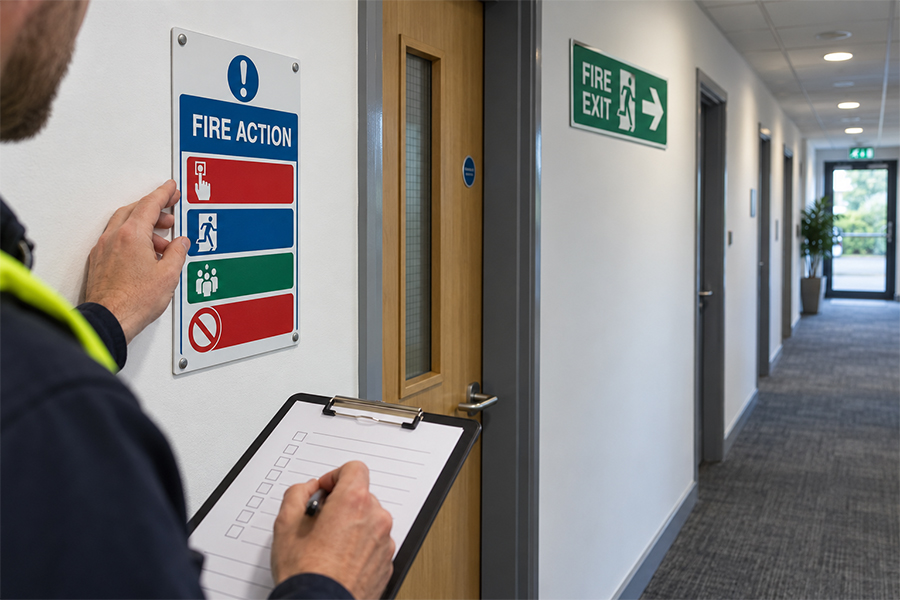
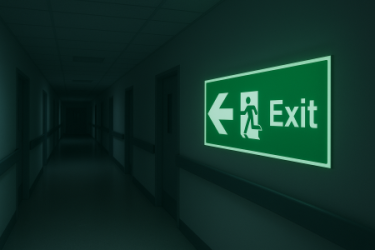
When planning construction site signage, follow your fire risk assessment for emergency messages. Identify exits and escape routes clearly where necessary. Also, direct people towards firefighting equipment and the assembly point in your emergency plan.

In addition, check each arrow against the actual route. Otherwise, a clear sign could still send someone towards a locked door or blocked passage. During refurbishment, protect the escape arrangements for existing occupants as well as your workforce.
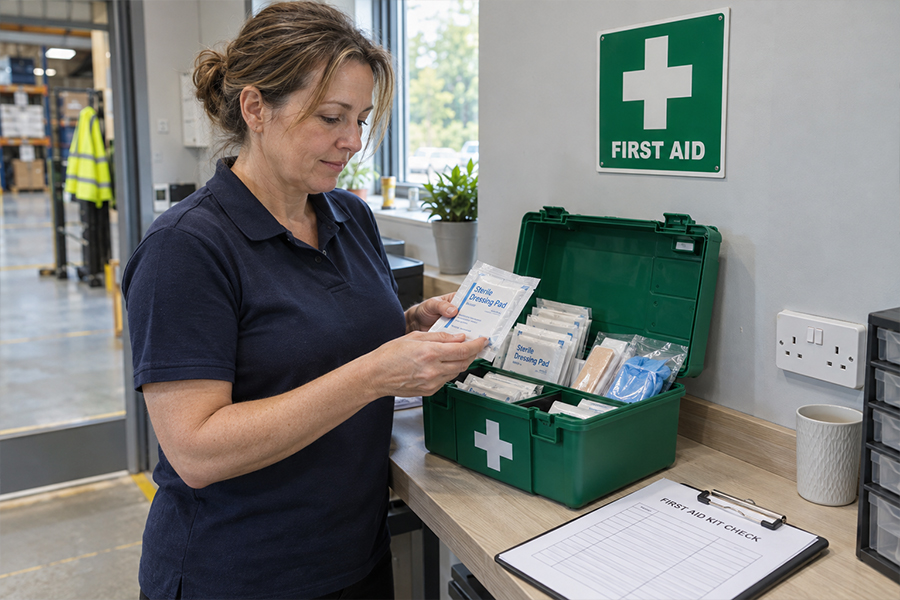
Similarly, help everyone locate first aid equipment and the person who manages your first aid arrangements. Display current names and contact details in a place workers can find easily. Then explain those arrangements during induction and update the notice when personnel change.
Make Every Message Easy to See
Choose positions that give people enough time to understand and follow each instruction. For example, mount a hazard warning before the approach to the hazard. Keep sightlines clear of parked vehicles, stacked materials and open doors.
Consider the viewing distance, lighting, approach angle and amount of information. For example, a small sticker may work beside equipment. However, an entrance board needs enough space for people to read it from their approach.
For construction site signage, assess the whole message, including symbols and text. Moreover, check visibility during the conditions in which people actually work. A sign that looks clear at midday may disappear in poor light.
Avoid crowding too many instructions together. Instead, group related messages and remove notices that no longer apply.
Choose Materials for the Location
Before ordering, consider the surface, weather exposure, fixing method and expected period of use. For instance, a sign on an exposed fence faces different conditions from a label inside a site office.
EU Signs Ltd offers materials including Correx, Foamex, rigid PVC and Aluminium Composite Panel (ACP). However, the right choice depends on your application. Ask us to match the material and fixing arrangement to the location.
Also, allow for cleaning, handling and replacement as the project develops. Review our guide to signage materials before preparing your construction site signage order. Provide the dimensions, quantities and installation details so we can recommend suitable options.
Keep Pace with Changing Work
Assign a responsible person to review signs alongside your routine site inspections. Then add further checks whenever you change access routes, move equipment or begin a different work phase.
For example, relocating a welfare cabin may change the route to first aid facilities. Similarly, a new excavation may require different warnings and access restrictions. Remove outdated directions promptly so workers receive one clear message.
Check your site safety signs for dirt, fading, damage and loose fixings. In addition, confirm that arrows, names and contact details still match the site. Record problems and assign each action to someone who can resolve it.
Regular reviews keep construction site signage relevant throughout the project. Share significant changes at briefings, because even familiar routes can create confusion after a layout change.
Download your free inspection checklist
Our two-page PDF provides checks for entrances, work areas, traffic routes, emergency information, visibility and ongoing reviews. It also includes an action log for any problems you find.
To use it effectively:
- First, enter the site details, inspection date and reviewer’s name.
- Next, walk the site with your risk assessments and current layout.
- Then mark each check as Yes, Action or N/A, and explain any N/A decisions.
- Afterwards, record each problem, responsible person and target date.
- Finally, check completed actions and set the next review date.
Use the checklist to support your inspection; it does not replace your risk assessment or prove legal compliance.

Download the free construction site signage checklist.
Get signs that match your project
EU Signs Ltd designs and manufactures safety signs for construction projects across the UK mainland. We can also customise wording, sizes and site details to suit your requirements. In addition, we do not charge extra for graphic design of safety signs.
Browse our health and safety signs or contact EU Signs Ltd with your checklist, quantities and delivery deadline. Together, we can turn your construction site signage requirements into a clear, practical order.





Recent Comments